Battery Prep and Flame Straightening
I took my time with the flame straightening, I probably could've sped it up a bit but I also needed a break from construction for a little while as well.
I moved on to getting the battery ready. I bought raw LiFePo4 battery cells and a BMS (Battery management system aka the protection circuits) so I could custom-build my own battery. I did this partially for cost reasons and partially so I could assemble the battery in the battery compartment. The battery cells and BMS combined weight about 200 lbs not including any protective covering, cables or other electrical items such as bus bars, fuse blocks, inverter/charger. All in the battery system and other electronics are about 300 lbs total.
I decided on 628 AH EVE MB56 cells. I ordered them directly from a company in china who paid for DDP shipping which means they pay for any duties, taxes, tariffs, and shipping costs so the price I pay is the price delivered. It worked out to $121/cell. I bought 16 cells to keep the shipping cost per cell down and sold the other 8 cells on facebook marketplace for $125/cell.
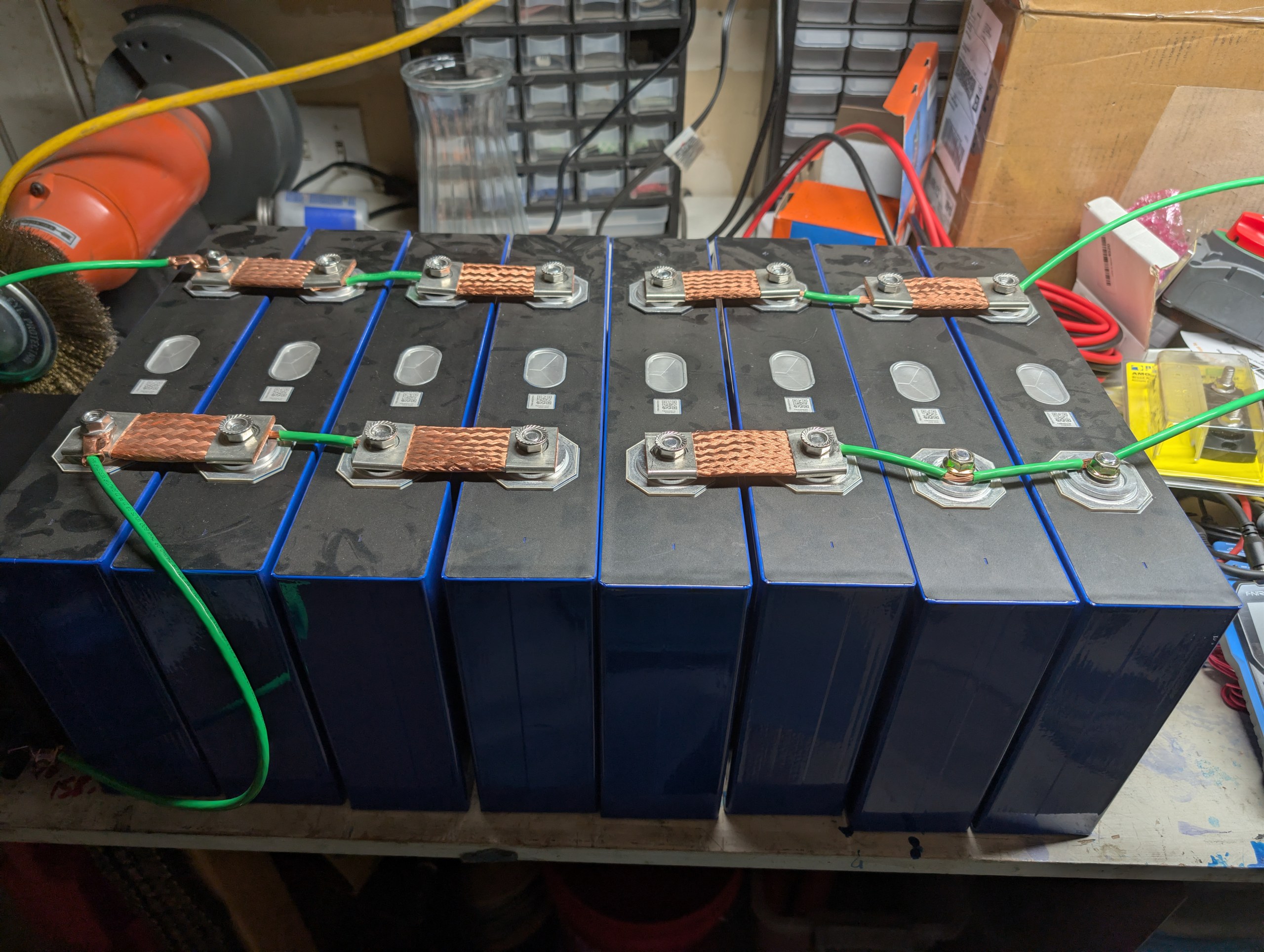
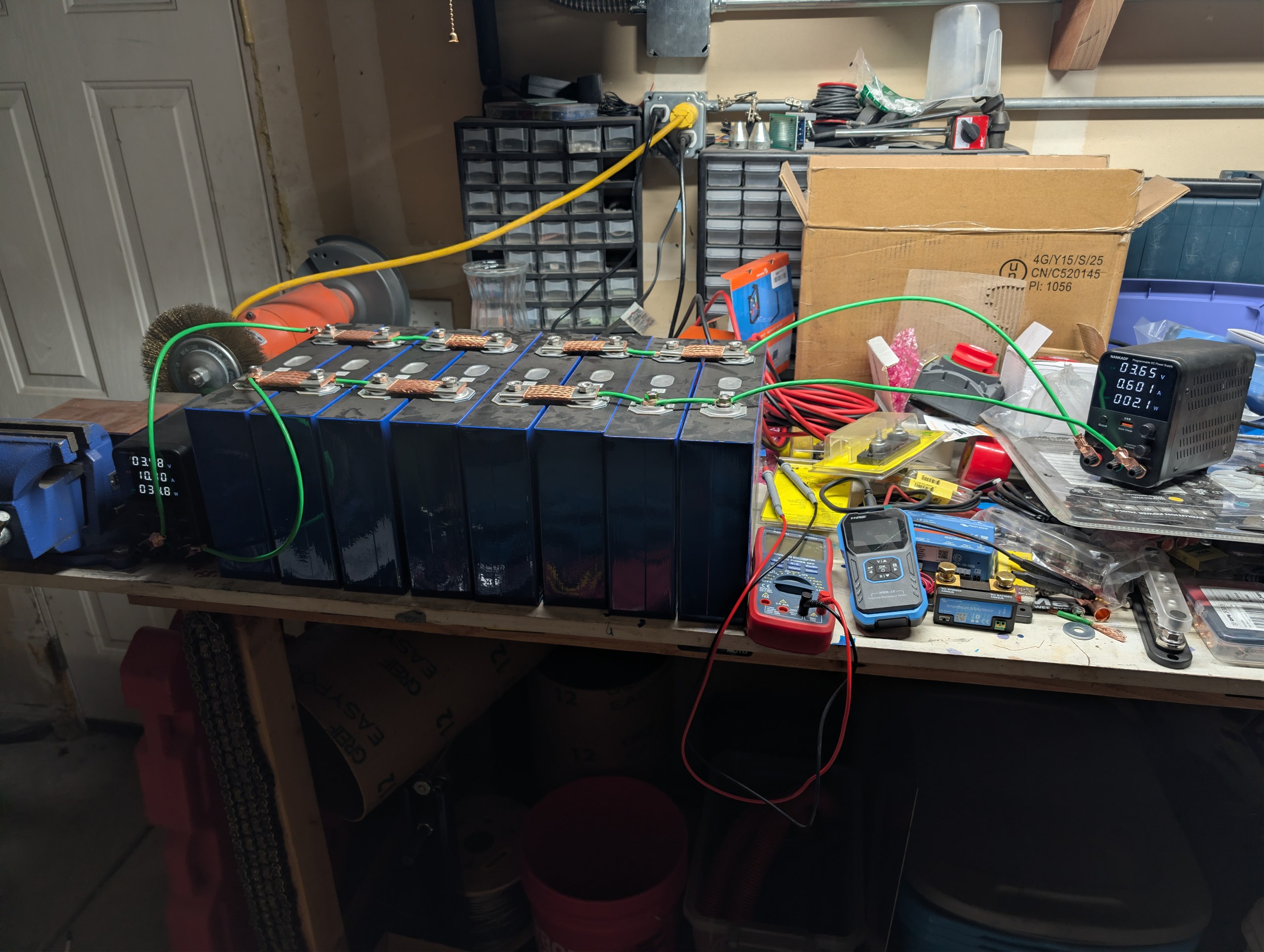
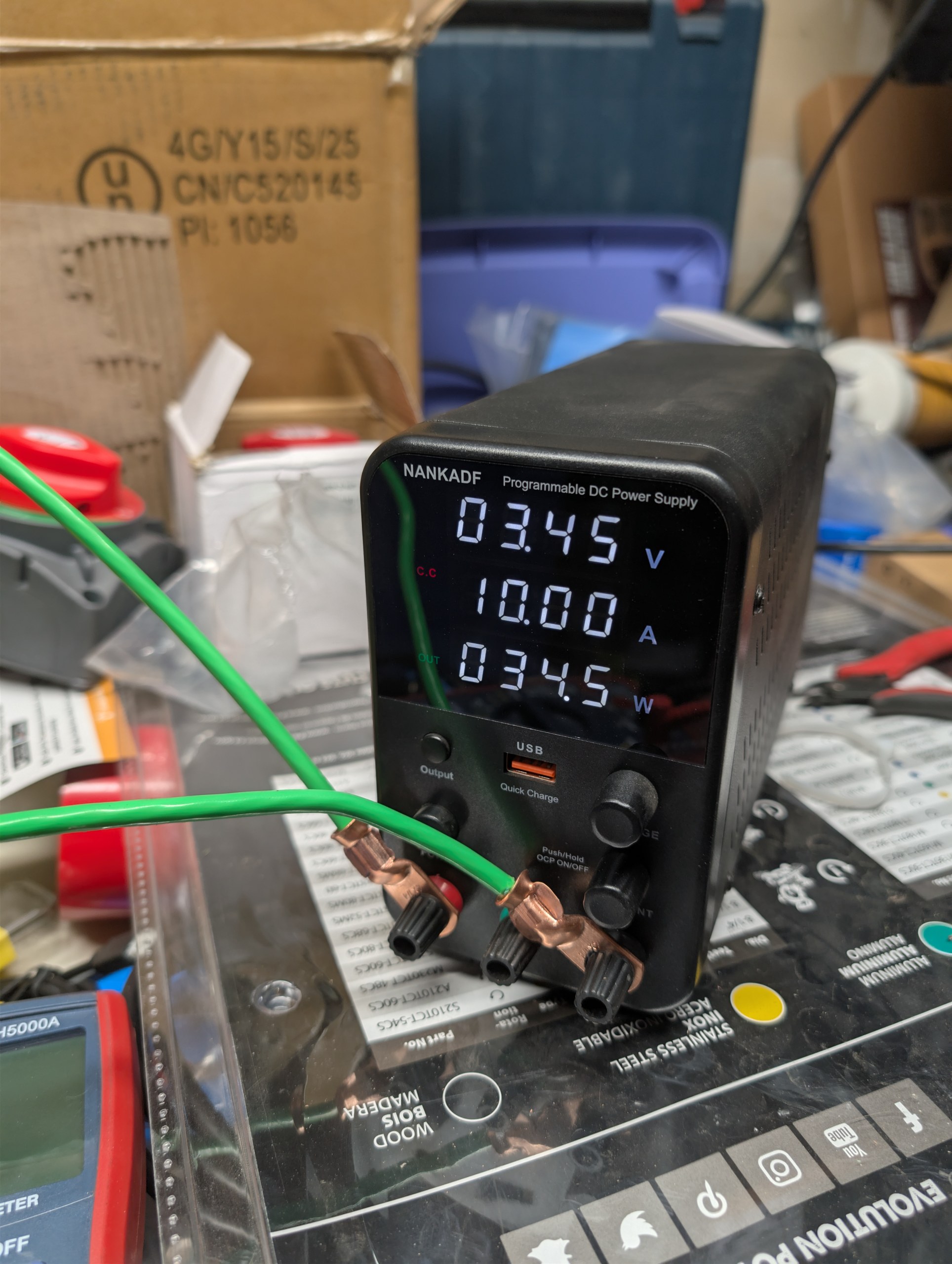
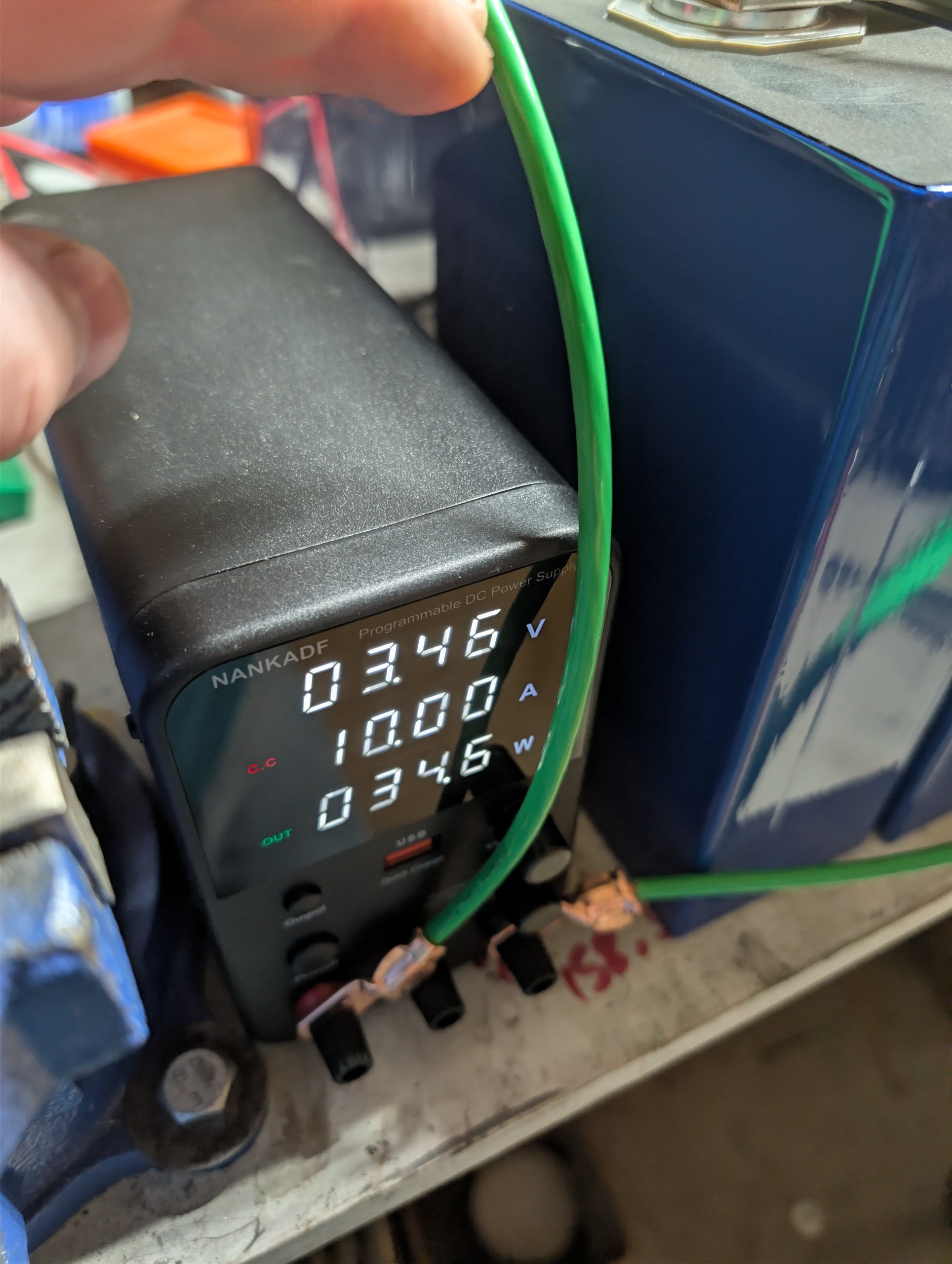
The first step is to condition the battery cells called top balancing. This is where the batteries are connected in parallel (positive to postive terminals and negative to negative) which basically keeps the voltages at 3.2v. Then using a regulated small benchtop power supply I apply a CC/CV charge at 3.65v (the rated max per cell for charging) to the batteries, being connected in parallel this will force all the batteries to have the same state of charge. This makes cell balancing MUCH easier on the BMS especially for such massive batteries.
I jury rigged something up, and after a few days I ordered another benchtop power supply. The whole process took about a week. Due to the charge curve on LiFePo4 cells the time it takes to go from 3.5v to 3.65v could be hours after it takes a week or more (at 10 amps) to get the cells up from their roughly 80% charge they were at initially.
During this time I mapped out my connectors, disconnects, wiring sizes, bought bus bars, cable lugs etc. I already had a hydraulic crimper I used for my deck cable railing project, so I bought some cable crimping dies for it as well. For the temporary top balancing connections, I threw something together with leftovers I had laying around.
It was a slower time, I needed a break from working on things.